

23 Jan
Indonesia 2026: The Aggressive Pivot
From Policy Signals to Enforcement Reality
Indonesia has entered a new industrial phase. The 2024–2025 regulatory cycle marks a clear transition from policy intention to enforcement. Licensing is now selective, incentives are targeted, and compliance is non-negotiable. The government is intentionally raising entry barriers to accelerate the shift from extraction and low-value manufacturing toward high-value, technology-driven, and export-oriented industries. For investors, the question is no longer whether Indonesia is attractive.
The question is where execution is most reliable.
The 2026 Industrial Direction
Nickel and Critical Minerals: Value Must Stay Onshore
Indonesia’s nickel strategy now prioritizes downstream integration. Mining permits are tied to processing, and policy clearly favors battery materials, precursors, and EV supply chains over raw exports.
This positions Indonesia as a global EV and battery hub, not a commodity supplier. Investors aligned with integrated processing, HPAL technology, and battery manufacturing are structurally advantaged.
Energy and Renewables: Net Zero Becomes Cost Variable
With coal restrictions and active carbon pricing, energy is now an operational and financial consideration. Industrial users increasingly require certifiable renewable power to maintain export access and cost competitiveness.
Indonesia’s energy transition has moved into execution and monetization, creating demand for captive renewables, storage, and carbon-aligned industrial estates.
Manufacturing: Selective, Not Mass-Market
Indonesia is no longer competing as a low-cost assembly base. Licensing and incentives now prioritize:
- High-tech manufacturing
- Automation and Industry 4.0
- Low-carbon, export-ready production
This marks a realignment of FDI toward precision and capability, not labor arbitrage.
Digital Infrastructure: Regulation Drives Physical Demand
Data protection enforcement and sector prioritization are driving real investment into data centers, smart infrastructure, and compliant digital facilities. Digital growth in Indonesia now requires physical, energy-secure assets.
Why Batam Is the Strategic Industrial Platform
Batam combines regulatory alignment, logistics efficiency, and regional access.
Batam is where Indonesia’s industrial pivot is already operational that offers:
- Proximity to Singapore and international trade routes
- Established industrial corridors and ports
- Special Economic Zones (KEK) for high-value industries
- Renewable energy potential and cross-border connectivity
Batam functions as:
- A downstream coordination hub for EV and battery industries
- A green energy gateway for regional markets
- A high-tech manufacturing base aligned with new licensing priorities
- A compliant digital infrastructure location under national regulations
Tunas Prima Industrial Estate: Built for Execution
In an enforcement-driven environment, industrial estates must deliver more than land.
Tunas Prima Industrial Estate (TPIE) is a 100-hectare green industrial estate developed by Tunas Group, located in Kabil, one of Batam’s most active and established industrial zones. TPIE is designed to support export-oriented, technology-driven manufacturers seeking operational certainty and long-term efficiency.
Strategic Accessibility
- Hang Nadim International Airport: 5 minutes
- Nongsapura Ferry Terminal: 10 minutes
- Batam Center Ferry Terminal: 15 minutes
- Batu Ampar Container Port: 30 minutes
Operational Infrastructure
- 100% renewable energy supply, in partnership with PLN
- Secure water management with alternative sources
- Green Mark–certified infrastructure and smart estate planning
- Wide internal roads and stable utilities
- Integrated fire safety and premium power services
One-Stop Business Solutions
TPIE provides an integrated development and operational platform:
- Feasibility study and site planning
- Facility design and construction
- Built-to-suit development
- Standard Factory Buildings (SFB) from 640 m² to 3,220 m²+
- Industrial land sales and custom development options
Available factory typologies support scalable manufacturing, from precision assembly to large-format industrial operations.
A Thriving Manufacturing Ecosystem
TPIE is home to national and international manufacturers aligned with downstream and technology-oriented industries. Their presence reflects confidence in TPIE’s infrastructure, reliability, and execution capability, including:
- PT Solder Tin Andalan Indonesia
- Haitai Solar
- PT Luxsan Precision Indonesia (Luxshare ICT)
- CLOU Midea Electronic
- PT STGM Industri Manufaktur (Zhengte)
- Professional Testing Services (PTS)
- PT CEME Fluid Solutions
- And many more…
Choosing the Right Platform in Indonesia 2026
Indonesia’s aggressive pivot is already in motion. The advantage lies with investors who align early—with the right location and the right partner. Batam offers connectivity, compliance, and regional access. Tunas Prima Industrial Estate delivers a practical, integrated platform for industrial execution. For companies focused on long-term operations, regulatory certainty, and export competitiveness, TPIE is positioned to support the next phase of industrial growth in Indonesia.
19 Jan
Nickel Outlook Indonesia 2026
Nickel on Rise: From Market Control to Downstream Advantage
In 2026, Indonesia’s nickel industry enters a decisive phase. What began as a strategy of scale is now evolving into one of discipline, integration, and long-term value creation. As the world’s largest nickel producer, Indonesia is no longer merely responding to global demand—increasingly shaping the structure of the market itself.
This transition is anchored in a clear policy reset: tightening upstream supply while accelerating downstream value creation, positioning Indonesia as a strategic backbone of the global battery and clean energy supply chain.
1. Recalibrating Supply: From Volume to Control
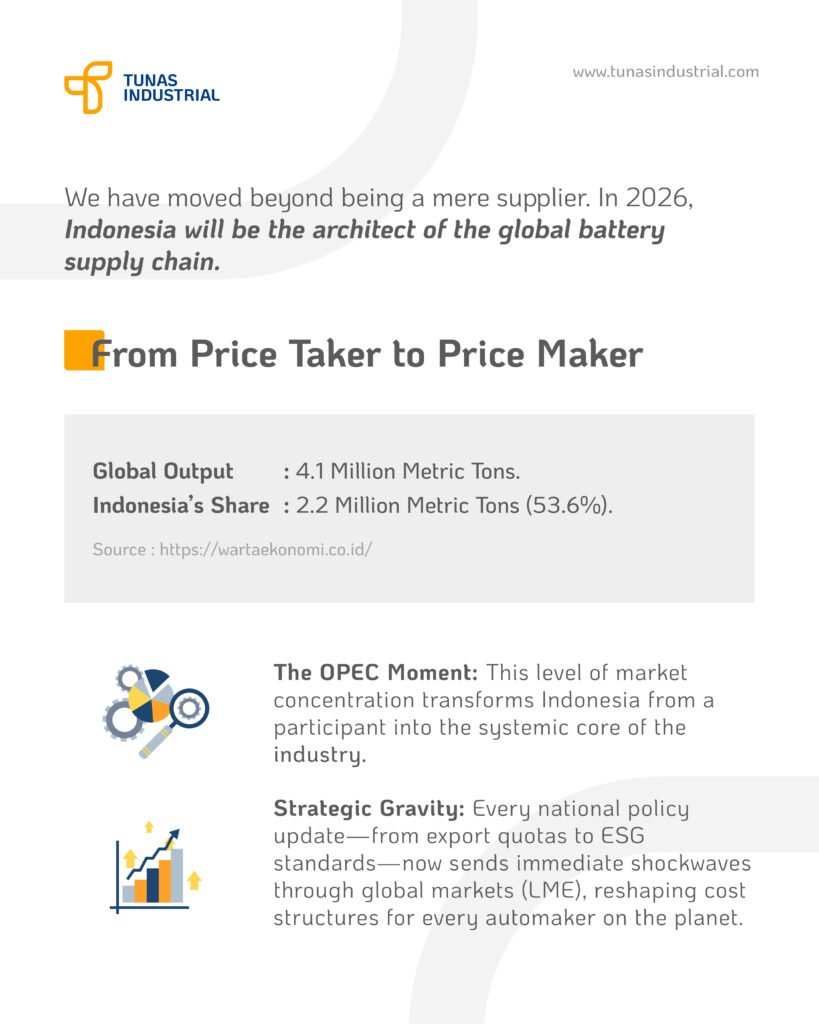
Indonesia plans to reduce raw nickel ore production in 2026 from approximately 379 million tonnes in 2025 to around 250 million tonnes. The objective is to manage global oversupply, stabilize pricing, and rebalance industry incentives. Given Indonesia’s dominant share of global nickel output, even partial implementation sends immediate signals across international markets—marking a structural shift from price taker to market shaper.
2. Price Discipline and Market Volatility
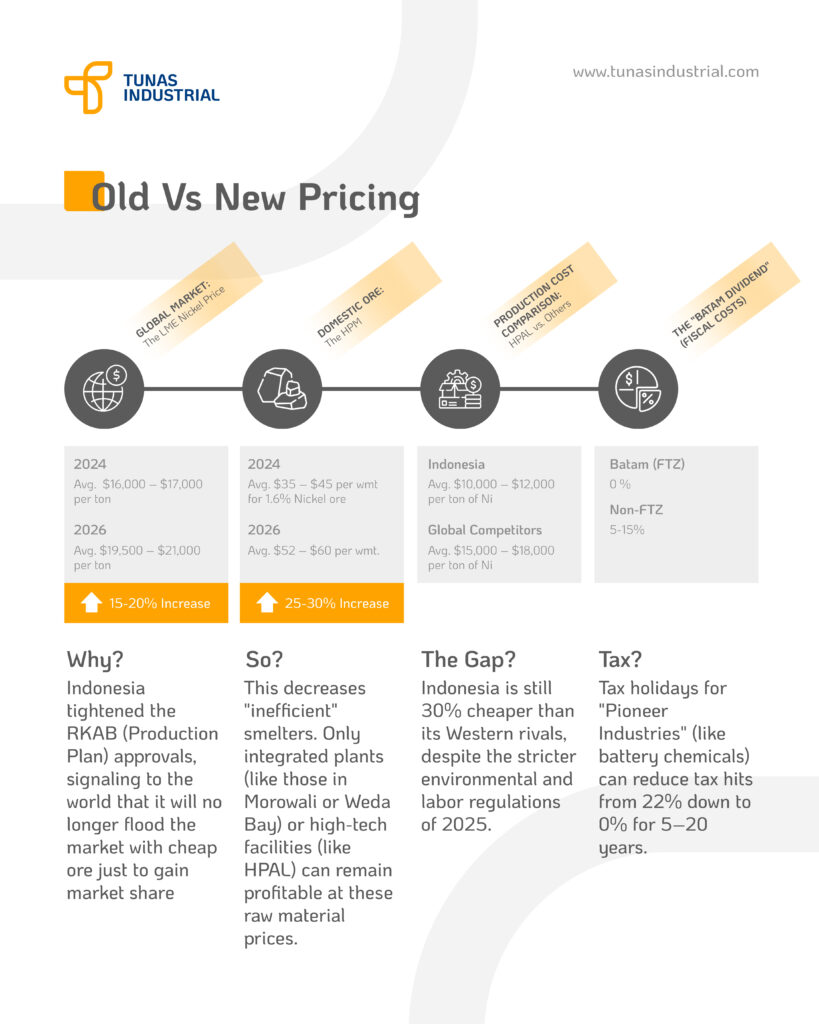
Production control is designed to support nickel prices after years of compression. Still, 2026 is expected to remain volatile, shaped by regulatory enforcement, miner compliance, and global demand dynamics. In this environment, competitiveness is no longer driven by volume alone, but by cost efficiency, integration depth, and location within the value chain.
3. Downstream Integration as Strategic Core
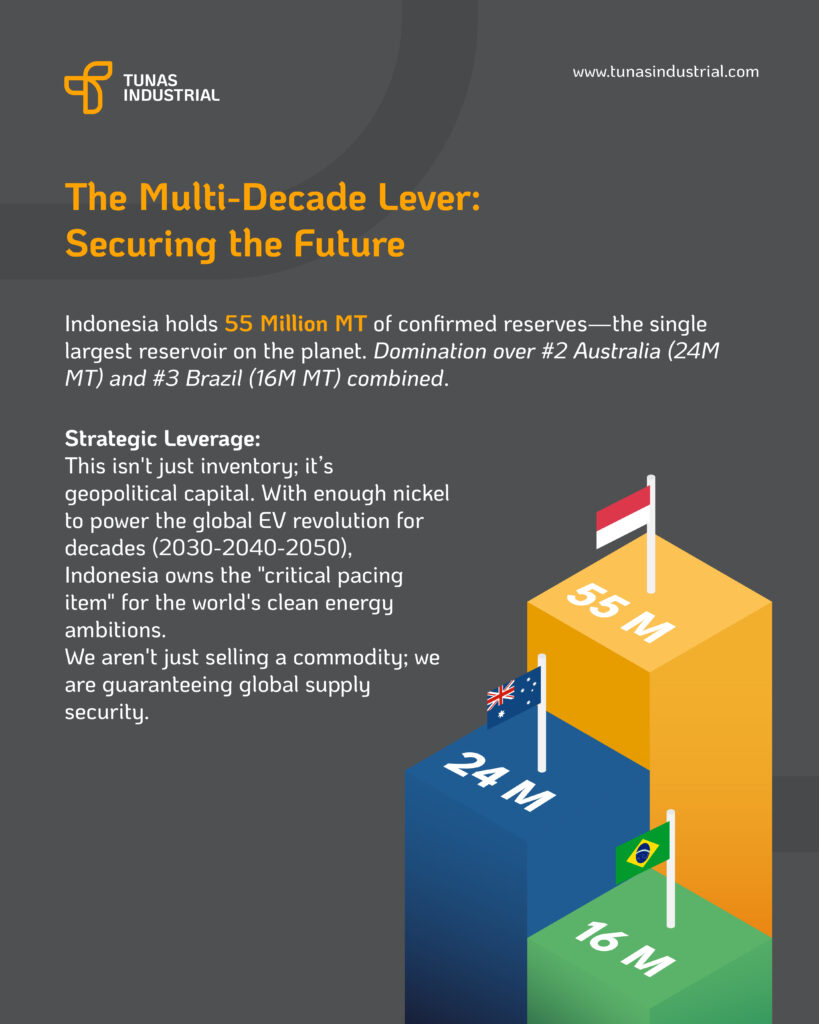
Beyond supply discipline, Indonesia’s primary objective is value capture. Policy focus continues shifting toward battery-grade nickel products such as:
- Mixed Hydroxide Precipitate (MHP)
- Nickel sulphate
- Cathode precursor materials
Despite growing adoption of LFP batteries, nickel-intensive chemistries remain critical for long-range EVs and energy storage solutions. Long-term EV demand growth toward 2030 continues to underpin structural nickel demand. Indonesia is no longer exporting ore—it is embedding itself into global EV, battery, and energy storage ecosystems.
4. Regulatory Tightening Reshapes Competitive Advantage
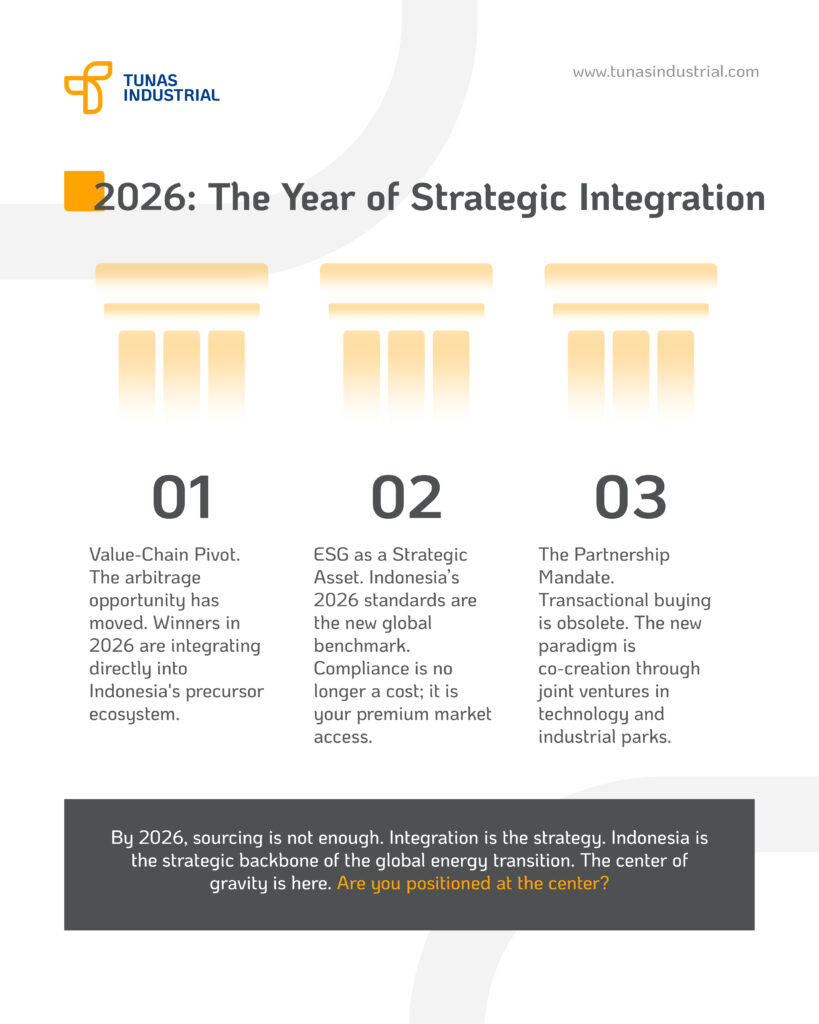
Stricter RKAB approvals, tighter environmental governance—particularly for HPAL operations—and higher compliance standards are reshaping industry economics. Lower-efficiency operators face margin pressure, while integrated and compliant players gain a durable edge. As a result, capital increasingly gravitates toward locations that minimize regulatory friction while maintaining export efficiency.
5. Batam: The Downstream Industrial Hub
As upstream nickel production becomes more disciplined, downstream flexibility and efficiency become decisive. In this context, Batam emerges as a strategic downstream hub where processing, component manufacturing, and export converge.
Batam’s advantages include:
- Free Trade Zone (FTZ) status, enabling 0% import duties
- Proximity to Singapore’s logistics, finance, and certification ecosystem
- Export-oriented infrastructure and regulatory efficiency
This positioning is reinforced by an existing base of export-oriented manufacturers in electronics, energy, precision engineering, and industrial services—demonstrating Batam’s readiness for advanced downstream industries.
6. Tunas Prima: Translating Strategy into Industrial Readiness
Within Batam, Tunas Prima Industrial Estate (TPIE) functions as an execution platform for downstream industrialization aligned with Indonesia’s nickel strategy. Designed to support advanced manufacturing and energy-related industries, Tunas Prima offers:
- A masterplanned industrial environment with scalable land availability
- Infrastructure suited for high-spec, export-driven operations
- Alignment with green industry principles and sustainability standards
With established international manufacturers such as Luxshare ICT and CLOU Electronics—whose their first Battery Energy Storage System (BESS) manufacturing in Indonesia—Tunas Prima demonstrates operational readiness as an industrial ecosystem capable of accommodating and scaling downstream industries, including nickel-related investments.
Conclusion
Indonesia’s nickel outlook in 2026 is no longer defined by how much it produces, but by where and how value is completed. As upstream supply becomes more disciplined, downstream execution becomes the differentiator. Batam represents the logical convergence point for export-oriented value creation—while Tunas Prima provides the industrial readiness that translates national policy into global supply chain participation. Connect with us now.
08 Dec
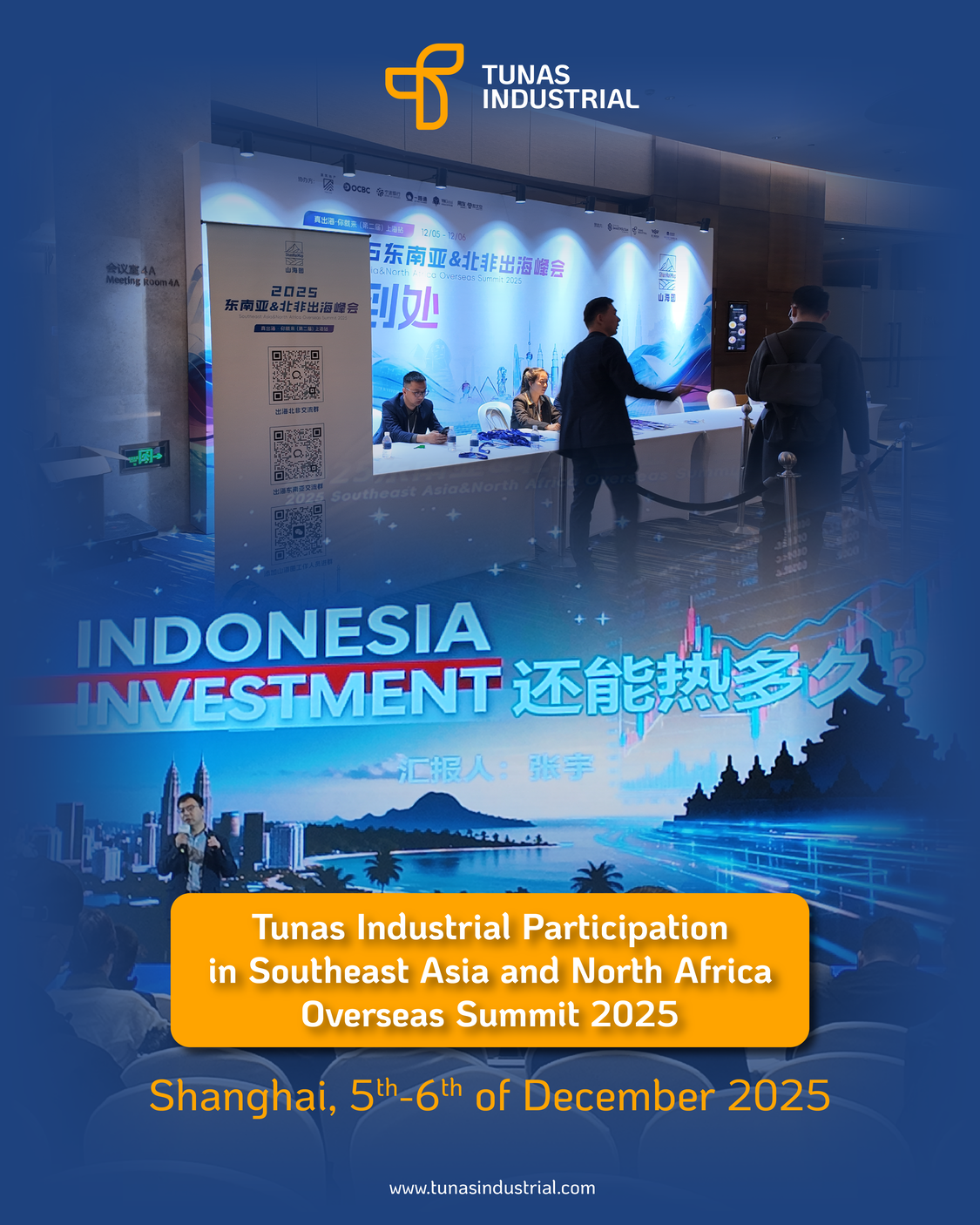
Tunas Industrial Participated at Southeast Asia & North Africa Overseas Summit 2025
Shanghai, China — December 6, 2025. Tunas Industrial proudly participated in the Southeast Asia & North Africa Overseas Summit 2025, held on December 5–6 at Primus Hotel Shanghai Hongqiao. Hosted by Shan Hai Map, the event drew over 4,500 enterprises exploring expansion into fast-growing global manufacturing destinations.
The summit highlighted major structural shifts in global supply chains, positioning Southeast Asia and North Africa as rising hubs for advanced manufacturing. Indonesia stood out for its economic stability, competitive talent pool, expanding industrial ecosystem, and rapidly improving infrastructure.
A Strong Momentum for Indonesia in Global Supply Chain Shift
Across the sessions, experts emphasized fast-growing sectors—including green energy and battery systems, EV components, medical devices, data centers, smart electronics, and chemical processing—all of which strongly align with China’s industrial strengths and present substantial collaboration potential.
A comprehensive site selection analysis further reinforced Indonesia’s appeal. Evaluating logistics access, workforce readiness, fiscal incentives, and regulatory clarity, Indonesia—particularly Batam—emerged as a top choice for companies seeking efficient, scalable, and strategically located operations. Its proximity to Singapore and strong government support make it an ideal base for Chinese enterprises expanding into the Southeast Asia market.
The discussions also underscored Indonesia’s rapid move toward higher-value manufacturing. Rising demand across EV ecosystems, renewable energy, electronics, medical devices, and digital infrastructure continues to attract Chinese participation, supported by clearer regulations and expanding industrial connectivity.
Regulatory updates, PPP-driven infrastructure opportunities, and Indonesia’s long-term new-energy roadmap further strengthened confidence in the country’s investment outlook. Combined with the momentum of its digital and retail economy, Indonesia is increasingly recognized as one of Asia’s most dynamic and future-ready growth markets.
Tunas Prima — A Strategic Gateway for Chinese Enterprises
Throughout the summit, Tunas Industrial hosted an exhibition booth providing direct insights into Batam’s market potential and Indonesia expansion opportunities. The team showcased Tunas Prima Industrial Estate, emphasizing its integrated green industry ecosystem, scalable facilities, and modern infrastructure designed to support seamless foreign investment.
Visitors gained a clearer understanding of Batam’s unique position within the Singapore–Malaysia–Batam Golden Triangle, offering unmatched connectivity for regional manufacturing and distribution. With government-backed incentives and robust utilities, Tunas Prima stands as a catalyst for advanced manufacturing and a reliable partner for Chinese companies entering Southeast Asia.

02 Dec
Indonesia’s New Regulations for Green Investment
Following its transition toward a green economy, Indonesia is reinforcing its legal and regulatory foundation to create a more competitive and sustainable investment climate. Through strategic reforms — from streamlined licensing to fiscal incentives and legal certainty — Indonesia is positioning itself as a leading destination for manufacturing, energy, and technology investments.
1. Omnibus Law & Digital Licensing via OSS RBA
Under the Job Creation Law (Omnibus Law) and the Online Single Submission – Risk-Based Approach (OSS RBA) system, Indonesia has established a fast, transparent, and fully digital licensing framework.
Investors can now obtain their Business Identification Number (NIB) and operational permits within days, based on risk assessment levels. This reform shortens bureaucratic processes and provides greater certainty for foreign companies looking to start operations in Indonesia.
2. Fiscal Incentives: Tax Holiday & Tax Allowance
For priority sectors such as renewable energy, electric vehicles, semiconductors, and pharmaceuticals, the government offers tax holidays of up to 20 years and tax allowances allowing up to 60% deduction of taxable income. These incentives aim to attract global manufacturers seeking to use Indonesia as their production and export hub in Southeast Asia.
3. Legal Certainty on Foreign Industrial Land Ownership
Legal assurance remains a cornerstone for foreign investors. Under Law No. 25 of 2007 on Investment, foreign investors are entitled to equal treatment with domestic investors, including protection of property and business rights. Although foreign entities cannot directly own freehold land, they can legally hold industrial property through a Foreign Investment Company (PT PMA), a legal entity that allows:
- Right to Build (HGB) or Right to Use (Hak Pakai) for industrial and commercial purposes
- Tenure of up to 80 years, including extensions
- Full legal protection under Articles 6 and 7 of Law No. 25/2007
4. Incentives for Green & High-Tech Industries
Aligned with Indonesia’s Net Zero Emission 2060 roadmap, the government prioritizes investments in green and high-tech sectors. Through policies such as the Green Investment Facility and ESG-based financing support, investors in solar panels, lithium batteries, hydrogen hubs, and sustainable digital industries enjoy enhanced access to funding and fiscal incentives.
Industrial zones such as Tunas Prima Industrial Estate (TPIE) in Batam have integrated sustainable infrastructure — from centralized waste management systems to Green Mark Infrastructure certification — making TPIE a leading destination for high-tech and eco-industrial expansion.
5. Indonesia–China Bilateral Collaboration: Manufacturing & Logistics
Economic cooperation between Indonesia and China continues to deepen, particularly in manufacturing, energy, and logistics infrastructure. Through the Belt and Road Initiative (BRI) and joint venture projects, Chinese investors are expanding their presence in Batam, Medan, Jakarta, Surabaya, Morowali, and Kendal as strategic production bases in Southeast Asia.
Located only 20 km from Singapore and along major international shipping routes, Batam holds a vital position within the regional maritime economic corridor. Tunas Prima Industrial Estate serves as a strategic bridge connecting China’s technological strength with Indonesia’s market potential and natural resources.
Toward A More Transparent and Sustainable Investment Ecosystem
Through regulatory reforms, fiscal incentives, and strengthened infrastructure, Indonesia is entering a new era of pro-business, sustainability-driven investment. The synergy between legal stability, streamlined licensing, and green energy commitment positions Indonesia not just as a promising market — but as a strategic partner for global investors building sustainable growth in Southeast Asia.

01 Dec
Renewable Energy Boom Drives New Wave of Investment in Indonesia
Transition from 2025 to 2026 marks a turning point for the global energy industry. As the world races toward a low-carbon future, renewable energy, advanced battery technology, and electric vehicles have become the new pillars of economic growth. With abundant natural resources and a maturing energy transition policy, Indonesia is emerging as a key player in Asia’s green energy landscape — and a prime destination for foreign investment, particularly from China.
Global Energy Transformation: From Climate Crisis to Green Revolution
The global energy market is undergoing a major shift driven by climate pressures, net-zero commitments, and rapid technological innovation. According to the International Energy Agency (IEA), nearly all additional electricity demand in 2025 will be met by low-emission sources, preventing over 2.6 billion tons of CO₂ annually. Companies embracing clean energy, digitalization, and ESG regulations are leading the next industrial wave.
Indonesia’s Green Power Potential — Trillion-Rupiahs Opportunity
Under its National Electricity Master Plan (RUKN 2024), Indonesia targets 73.6% renewable energy share by 2060, equivalent to 326 GW of clean generation capacity from a total of 444 GW. Key energy sources include:
- Solar power: up to 266 GW potential
- Wind power: up to 73.5 GW
- Battery & storage: 58 GW capacity
- Geothermal: second largest in the world
- Bioethanol & green hydrogen: fueling industrial and transport decarbonization
This transition represents an economic potential of over IDR 8,824 trillion (≈USD 560 billion) by 2060 — positioning Indonesia as a major hub for renewable manufacturing and sustainable investment.
Policy Support & Green Investment Incentives
The Indonesian government is advancing a pro-investment regulatory framework to accelerate the green transition, including:
- Feed-in Tariffs for renewable electricity pricing stability
- Power Wheeling schemes enabling private green power trading
- Tax holidays and fiscal incentives for renewable and EV manufacturers
- EV subsidies and import duty exemptions
- Integrated licensing via the OSS RBA system
Batam: Indonesia’s Emerging Green Industrial Hub
Strategically located near Singapore and Malaysia, Batam is evolving into a green manufacturing and export hub supported by advanced infrastructure and attractive fiscal incentives. One of its flagship estates, Tunas Prima Industrial Estate (TPIE), stands out as a ready-to-build green industrial park designed for renewable and sustainable manufacturing. Key advantages of TPIE include:
- Greenmark-certified infrastructure
- Integrated ESG-based water and waste management systems
- Seamless access to international airports, ferry terminals to Singapore & Malaysia, and logistic/cargo ports
- Flexible industrial land plots with modern utilities
Indonesia–China Partnership for Integrated Green Supply Chain
As a global leader in battery and EV technology, China holds a prime opportunity to expand its footprint in Indonesia — one of Asia’s most promising renewable markets. Through strategic joint ventures and technology transfer, both nations can build an integrated supply chain spanning batteries, EVs, and smart energy systems. Tunas Prima Industrial Estate provides the ideal gateway for Chinese investors to access the ASEAN market through ESG-driven, low-carbon industrial growth where sustainability meets profitability.

20 Nov
Indonesia Business Registry Guide for Foreign Investors (Part 2)
Choosing the Right Business Entity in Indonesia
Selecting the right business entity is one of the most important strategic steps for foreign investors entering Indonesia. The choice determines your ownership structure, tax exposure, licensing eligibility, and long-term scalability. Under Law No. 40/2007 and the Omnibus Law (Law No. 11/2020), foreign ownership, capital requirements, and business classifications must follow strict regulatory guidelines. Making the wrong choice can cause rejected applications, licensing delays, or even financial penalties. BKPM reported that in 2023, nearly 15% of foreign applicants faced setbacks simply because they registered under the wrong entity type. Choosing correctly is not a formality—it protects your investment.
PT PMA: The Primary Vehicle for Foreign Investors
A PT PMA (Perseroan Terbatas Penanaman Modal Asing) is the standard structure for foreign-owned companies in Indonesia. Under the Positive Investment List (Presidential Regulation No. 10/2021), most sectors allow up to 100% foreign ownership, with restrictions only for sensitive industries.
Key Requirements
-
Minimum total investment: IDR 10 billion per KBLI (≈ USD 650,000)
-
Paid-up capital: At least IDR 2.5 billion (≈ USD 160,000)
-
Corporate structure: Minimum 2 shareholders, 1 director, 1 commissioner
According to the Ministry of Investment, over 70% of new FDI approvals in 2023 were PT PMAs. For investors entering Batam, the PT PMA is even more attractive because it qualifies for special tax, customs, and FTZ incentives managed by BP Batam.
Representative Offices: A Low-Risk Market Entry
If your goal is to study the market, build networks, or coordinate with headquarters—without conducting commercial activities—a Representative Office (KPPA/KP3A) is a cost-efficient option.
Advantages
-
100% foreign ownership allowed
-
No capital requirement
-
Faster, simpler licensing via OSS RBA
Limitations
-
Cannot generate revenue
-
Cannot sign commercial contracts or issue invoices
-
License validity limited to 5 years (renewable)
Representative offices account for around 8% of foreign entries each year, typically for consulting, research, and trading support functions.
Comparison of Business Entities in Indonesia
| Business Entity | Ownership | Capital Requirement | Allowed Activities | Best For |
|---|---|---|---|---|
| PT PMA | Up to 100% foreign ownership (sector-dependent) | IDR 10B investment, IDR 2.5B paid-up | Full operations, contracts, revenue | Medium–large foreign investors |
| Local PT | 100% local shareholders only | From ~IDR 50M | Full operations, but no foreign ownership | Domestic SMEs (not for foreigners) |
| Representative Office (KPPA/KP3A) | 100% foreign (non-revenue) | None | Liaison, research, promotion (no sales) | Market testing / soft entry |
| Branch Office | Not applicable | N/A | N/A | Not available under Indonesian law |
This comparison illustrates why PT PMA is the gold standard for foreign investors intending to operate long-term in Indonesia.
Why Entity Choice Matters More in Batam
Batam’s status as a Free Trade Zone (FTZ) and its strategic location next to Singapore make entity selection crucial. The region attracted USD 1.3 billion in FDI in 2023, driven by manufacturing, shipbuilding, logistics, and electronics.
Choosing the wrong entity can result in lost tax benefits and customs exemptions—especially in Batam’s industrial zones.
Examples
-
A PT PMA in Batam can import raw materials tax-free, use bonded facilities, and re-export finished goods without VAT.
-
A Representative Office receives none of these benefits because it cannot conduct commercial activities.
The distinction directly affects profitability, making entity choice not just a legal issue, but a competitive advantage.
Compliance & Risk: What Investors Must Prepare For
After selecting the correct entity, ongoing compliance is critical. Investors must align with:
-
Tax obligations under the Directorate General of Taxes
-
Expatriate employment rules (Minister of Manpower Regulation No. 8/2021)
-
Environmental and operational permits depending on industry
-
KBLI alignment between registered activities and actual operations
In 2023, 12% of PT PMAs received compliance warnings for KBLI mismatches—an avoidable risk with proper planning.
The Strategic Path Forward
To operate confidently and efficiently in Indonesia:
-
Select the right entity (PT PMA for most foreign investors).
-
Register via OSS RBA to obtain a NIB and required sectoral licenses.
-
Leverage Batam’s FTZ and SEZ incentives where applicable.
-
Maintain compliance through accurate reporting and documentation.
By treating entity selection as a strategic investment decision—not a bureaucratic hurdle—foreign investors can secure long-term stability, maximize incentives, and ensure smooth operations in Indonesia.

21 Apr
One Stop Business Solution for Industrial Expansion in Batam
Indonesia is rapidly becoming Southeast Asia’s industrial powerhouse, and Batam stands at the forefront of this transformation. Strategically located within the Indonesia–Singapore–Malaysia Growth Triangle, Batam offers excellent infrastructure, competitive labor costs, and a thriving manufacturing ecosystem. But tapping into its full potential requires more than ambition—it demands local expertise, integrated solutions, and a partner who understands the landscape inside out.
That’s where Tunas Prima steps in.
Your Strategic Partner for Seamless Market Entry
Expanding your operations to Batam can be a game-changer—if done right. With Tunas Prima, you’re backed by a team of seasoned professionals offering end-to-end business support. From regulatory setup to infrastructure development, we ensure every step of your investment is efficient, compliant, and future-ready.
Comprehensive Business Solutions Tailored to Investors
We go beyond consulting—we offer hands-on execution and strategic insights to turn your plans into results.
- Market Entry Strategy: Understand Batam’s industrial terrain with localized, data-driven strategies.
- Supply Chain Optimization: Streamline costs and increase efficiency through smart logistics planning.
- Manufacturing Facility Selection: Choose the best industrial location aligned with your growth objectives.
- Operational Coaching: Empower your local teams with global-standard operational best practices.
Corporate Governance & Compliance You Can Trust
Doing business in a new country comes with legal complexity. We help you build a solid foundation to grow securely and sustainably.
- Company Formation & Structuring: Establish your entity with a robust legal framework and clarity.
- Regulatory Compliance & Governance: Stay aligned with dynamic Indonesian business laws and minimize risk.
- Accounting, Tax & Audit: Ensure financial transparency, efficiency, and audit readiness.
- HR & Payroll Services: Manage your workforce with precision and compliance.
Industrial Infrastructure & Facility Development
Whether you’re building a manufacturing plant or logistics hub, Tunas Prima transforms your ideas into world-class facilities.
- Master Planning & Design: Maximize productivity with intelligent, scalable layouts.
- Engineering & Structural Planning: Ensure facility resilience and long-term performance.
- Construction & Project Management: Deliver your project on time, within scope, and on budget.
Logistics, Shipping & Trade Facilitation
As Batam continues to rise as a trade hub, efficient logistics becomes your edge. We make cross-border trade smooth, reliable, and fast.
- Freight & Cargo Handling – Secure and cost-efficient transport solutions.
- Customs Brokerage & Compliance – Hassle-free import/export processing.
- Warehousing & Distribution – Optimize inventory storage and management.
- Port & Shipping Services – Reliable support for maritime operations.
Why Choose Tunas Prima?
Tunas Prima isn’t just a service provider—we are your strategic partner in long-term growth. With decades of local insight, extensive networks, and a commitment to execution, we help you scale with confidence.
- One-Stop Business Solution – From setup to execution, we handle it all.
- Industry Expertise – Deep knowledge of Batam’s business and regulatory landscape.
- Tailored Strategies – Customized solutions to fit your specific business needs.
Ready to take the next step? Let’s discuss how Tunas Prima can support your expansion in Batam!
📩 Contact us today to explore your opportunities.
22 Oct
Batam’s Labor Landscape: Unlocking Opportunities
Batam, strategically located near Singapore and Malaysia, is rapidly establishing itself as one of Indonesia’s foremost industrial and investment hubs. For businesses and investors aiming to penetrate Southeast Asian markets, a thorough understanding of Batam’s labor market, competitive wage structures, and regulatory environment is essential. This article explores the key elements that make Batam a compelling destination for business expansion.
A Dynamic Workforce Demographic
Batam’s workforce is youthful, skilled, and growing rapidly, with a labor force participation rate of 70%. Many workers are under 35, bringing energy and adaptability to industries like manufacturing and technology. The city’s industrial growth has developed a labor pool experienced in maintaining global standards, particularly in electronics, shipbuilding, and automotive sectors. This makes Batam an attractive hub for businesses looking to tap into Southeast Asia’s markets.
In addition to local talent, Batam attracts foreign professionals, particularly from Singapore, China, and Europe. These foreign workers bring specialized skills, contributing to high-tech and strategic industries. Their presence complements local talent, filling critical roles and enhancing Batam’s competitive edge in industries such as manufacturing and technology.
Key Industries Driving Employment
Manufacturing is the primary driver of Batam’s economy, employing the largest portion of the workforce. The electronics industry, in particular, has seen significant growth due to the city’s focus on technology-driven production. Other key sectors, like automotive and consumer goods manufacturing, also contribute to job creation and skill development for the local population.
While manufacturing remains dominant, Batam’s economy is diversifying into services, trade, and tourism. The growing hospitality and tourism sectors, fueled by visitors from neighboring countries, are creating new employment opportunities and expanding the city’s economic potential beyond its industrial roots. This diversification opens up new avenues for investors and businesses seeking to tap into Batam’s evolving landscape.
Competitive Wage Structure
One of the key advantages of operating in Batam is its competitive labor cost. In 2024, the minimum wage in Batam was set at Rp 4,685,050 per month for a 40-hour workweek. This wage level strikes a balance between ensuring worker welfare and maintaining business competitiveness, allowing companies to access a productive labor force without the high operational costs often associated with major cities like Jakarta or Surabaya.
The minimum wage policy in Batam is shaped by various economic factors, including inflation, economic growth, and the cost of living. In 2024, the determination of the minimum wage has garnered attention as the government collaborates with labor unions to establish a fair wage that supports both employee welfare and the economic viability of businesses. This cooperative approach aims to foster a stable labor market while encouraging investment in the region.
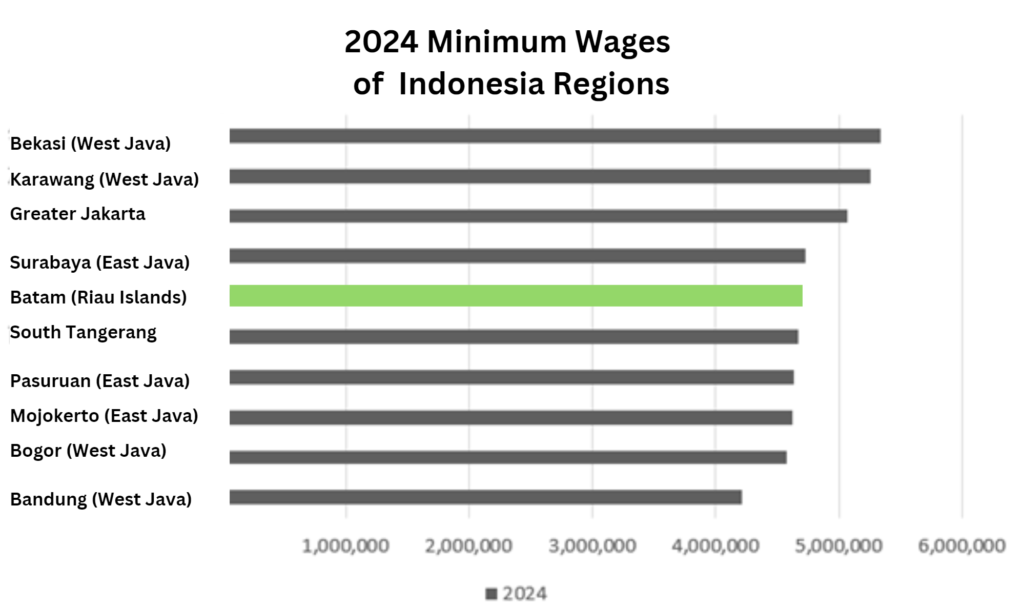
When compared to other regions in Indonesia, Batam’s minimum wage positions it in the middle tier. For example, while DKI Jakarta’s minimum wage is higher at Rp 5,067,381 per month, regions like Bekasi City and Karawang lead the country with minimum wages reaching Rp 5,343,430. This ranking illustrates that while Batam offers competitive wages, it remains manageable for businesses, ensuring that the region continues to attract investment.
Workforce Regulations and Labor Protections
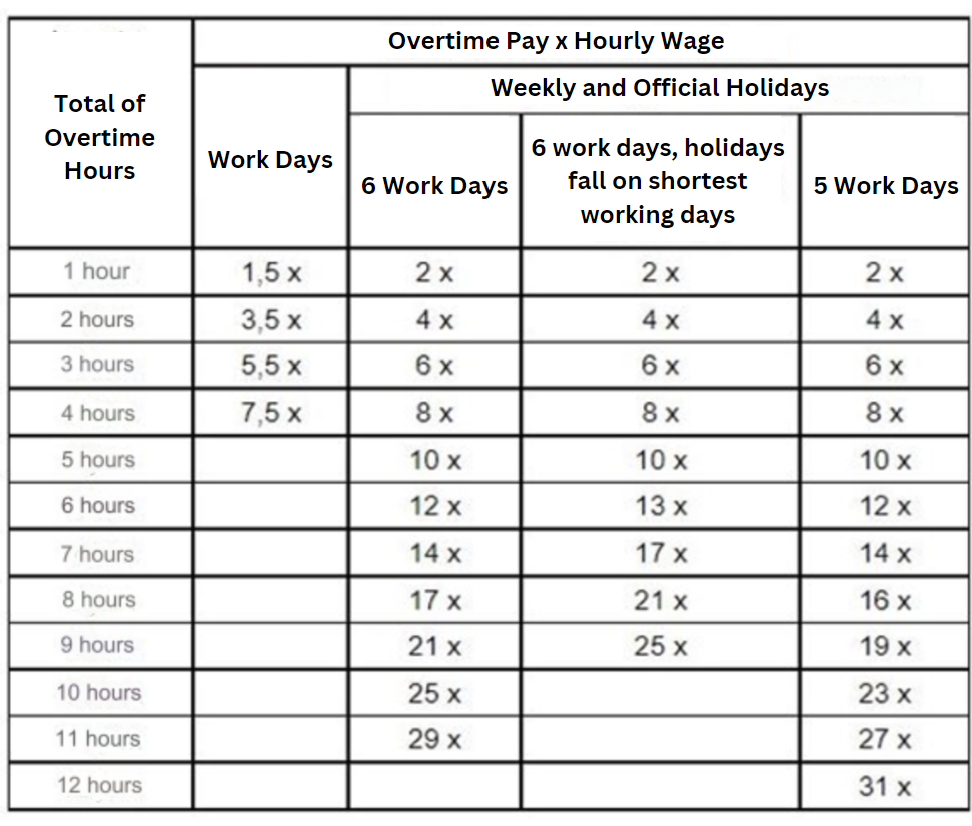
Indonesia’s labor laws are designed to protect workers while facilitating efficient business operations. Overtime work is regulated with specific calculations to ensure fair compensation, where overtime wages are based on an employee’s base salary divided by 173 hours for a standard work month. This clarity helps maintain worker satisfaction and productivity, providing stability for businesses.
In Batam, industries like electronics manufacturing and logistics often operate on a three-shift system to maximize productivity, typically consisting of three 8-hour shifts for 24/7 operations. Some companies may also use a two-shift system with 12-hour shifts over a 6-day workweek. To support night shift workers, businesses often provide incentives like snacks and drinks to help maintain their energy levels.
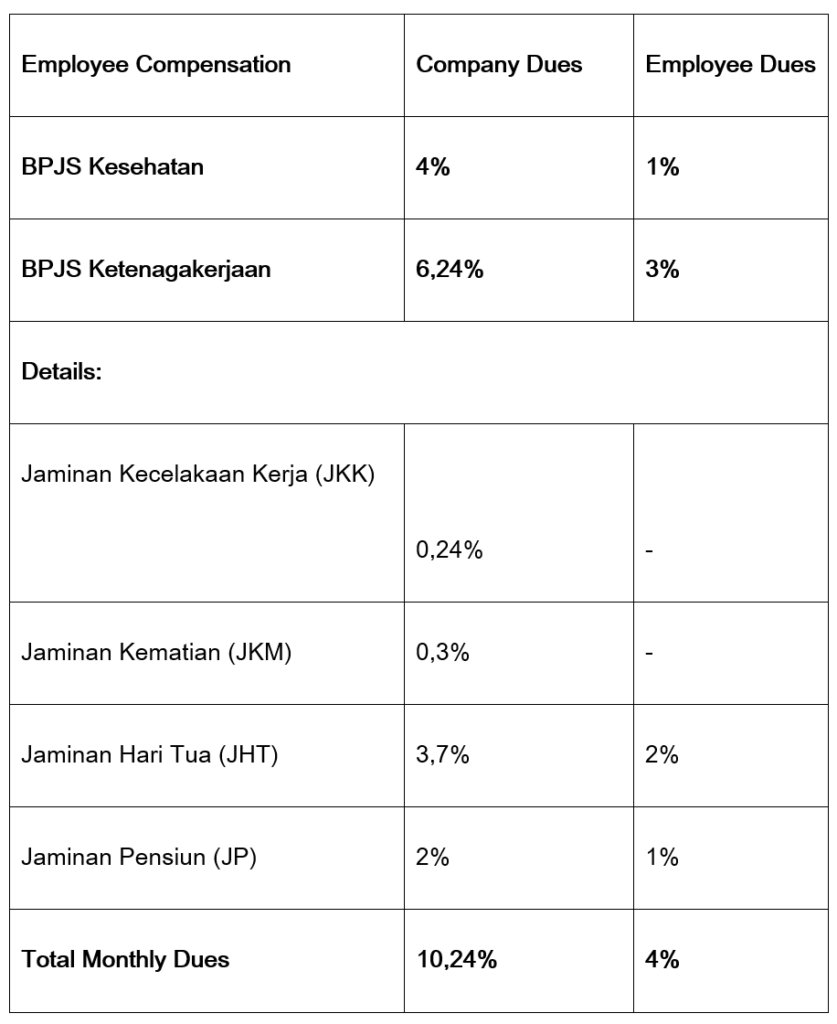
A crucial aspect of Batam’s labor environment is the comprehensive social security system managed by BPJS, which includes BPJS Kesehatan for health insurance and BPJS Ketenagakerjaan for employment protection. This system ensures workers have access to healthcare and support in case of workplace accidents, contributing to workforce stability.
Recruitment Trends and Talent Availability
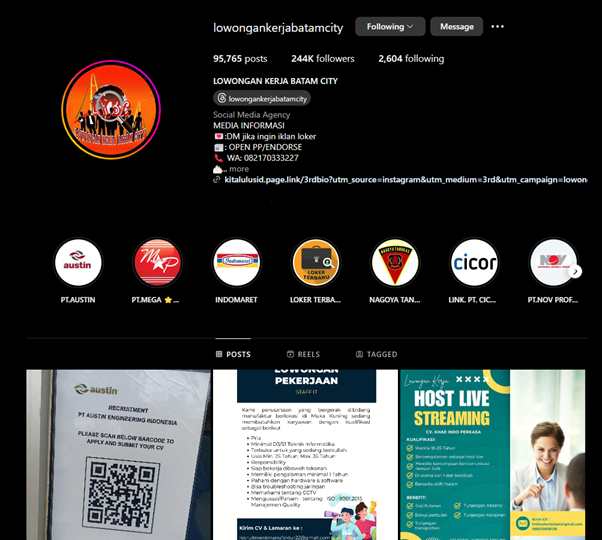
Batam’s labor market is dynamic, with diverse recruitment channels for both blue-collar and white-collar job roles. For blue-collar positions, companies primarily utilize local job portals, social media, and HR outreach to attract skilled workers, reflecting the high demand in sectors like manufacturing, construction, and assembly. In contrast, white-collar recruitment, especially for managerial roles, often involves professional platforms like LinkedIn and headhunters, ensuring access to top-tier talent. For critical positions, companies may even recruit expatriates from their head offices to bring in specialized expertise.
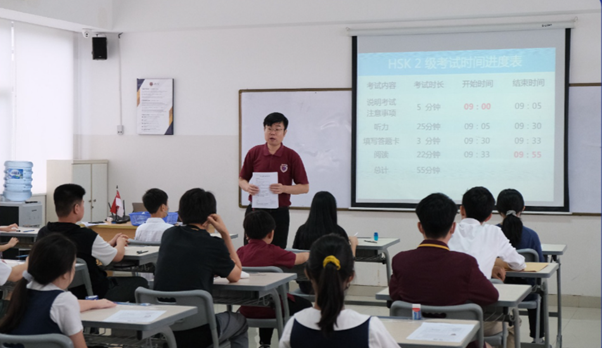
A unique aspect of Batam’s workforce is its multilingual capabilities, particularly in Mandarin. Many locals possess basic Mandarin skills, which is advantageous for businesses engaged in trade with Mandarin-speaking markets, such as China. The presence of a sizable Chinese community and Mandarin language programs in schools enhance this linguistic skill among the population. This capability not only fosters smooth international business relationships but also positions Batam as a multicultural city ready to connect local workers with the global job market.