

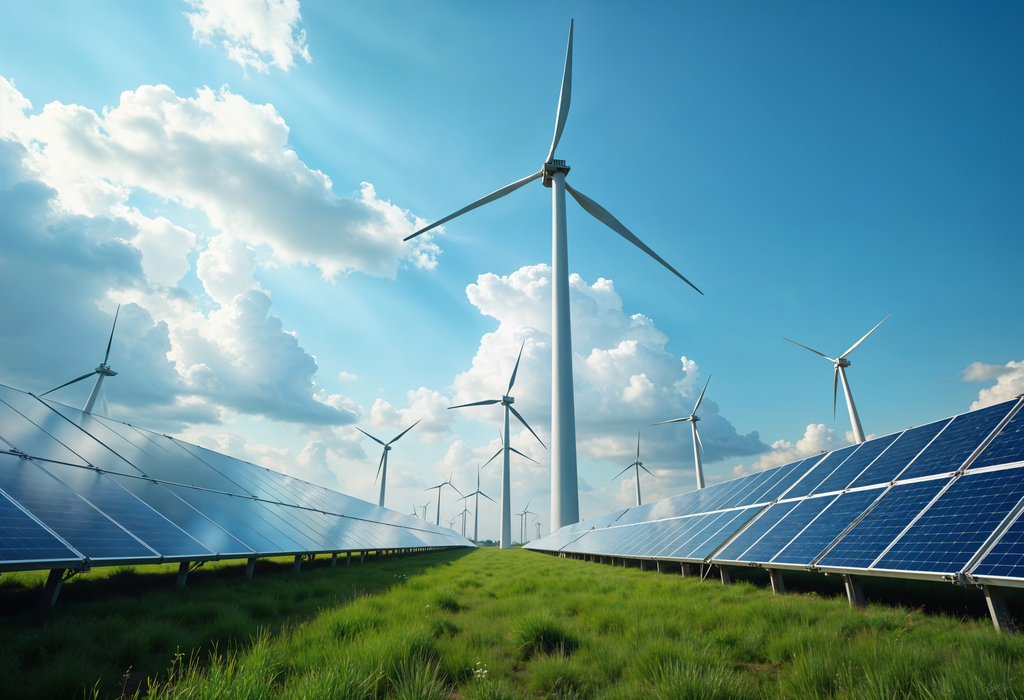
Transition from 2025 to 2026 marks a turning point for the global energy industry. As the world races toward a low-carbon future, renewable energy, advanced battery technology, and electric vehicles have become the new pillars of economic growth. With abundant natural resources and a maturing energy transition policy, Indonesia is emerging as a key player in Asia’s green energy landscape — and a prime destination for foreign investment, particularly from China.
Global Energy Transformation: From Climate Crisis to Green Revolution
The global energy market is undergoing a major shift driven by climate pressures, net-zero commitments, and rapid technological innovation. According to the International Energy Agency (IEA), nearly all additional electricity demand in 2025 will be met by low-emission sources, preventing over 2.6 billion tons of CO₂ annually. Companies embracing clean energy, digitalization, and ESG regulations are leading the next industrial wave.
Indonesia’s Green Power Potential — Trillion-Rupiahs Opportunity
Under its National Electricity Master Plan (RUKN 2024), Indonesia targets 73.6% renewable energy share by 2060, equivalent to 326 GW of clean generation capacity from a total of 444 GW. Key energy sources include:
- Solar power: up to 266 GW potential
- Wind power: up to 73.5 GW
- Battery & storage: 58 GW capacity
- Geothermal: second largest in the world
- Bioethanol & green hydrogen: fueling industrial and transport decarbonization
This transition represents an economic potential of over IDR 8,824 trillion (≈USD 560 billion) by 2060 — positioning Indonesia as a major hub for renewable manufacturing and sustainable investment.
Policy Support & Green Investment Incentives
The Indonesian government is advancing a pro-investment regulatory framework to accelerate the green transition, including:
- Feed-in Tariffs for renewable electricity pricing stability
- Power Wheeling schemes enabling private green power trading
- Tax holidays and fiscal incentives for renewable and EV manufacturers
- EV subsidies and import duty exemptions
- Integrated licensing via the OSS RBA system
Batam: Indonesia’s Emerging Green Industrial Hub
Strategically located near Singapore and Malaysia, Batam is evolving into a green manufacturing and export hub supported by advanced infrastructure and attractive fiscal incentives. One of its flagship estates, Tunas Prima Industrial Estate (TPIE), stands out as a ready-to-build green industrial park designed for renewable and sustainable manufacturing. Key advantages of TPIE include:
- Greenmark-certified infrastructure
- Integrated ESG-based water and waste management systems
- Seamless access to international airports, ferry terminals to Singapore & Malaysia, and logistic/cargo ports
- Flexible industrial land plots with modern utilities
Indonesia–China Partnership for Integrated Green Supply Chain
As a global leader in battery and EV technology, China holds a prime opportunity to expand its footprint in Indonesia — one of Asia’s most promising renewable markets. Through strategic joint ventures and technology transfer, both nations can build an integrated supply chain spanning batteries, EVs, and smart energy systems. Tunas Prima Industrial Estate provides the ideal gateway for Chinese investors to access the ASEAN market through ESG-driven, low-carbon industrial growth where sustainability meets profitability.