

29 Nov
TKMPN 2025 Delegation Visits Tunas Prima Industrial Estate
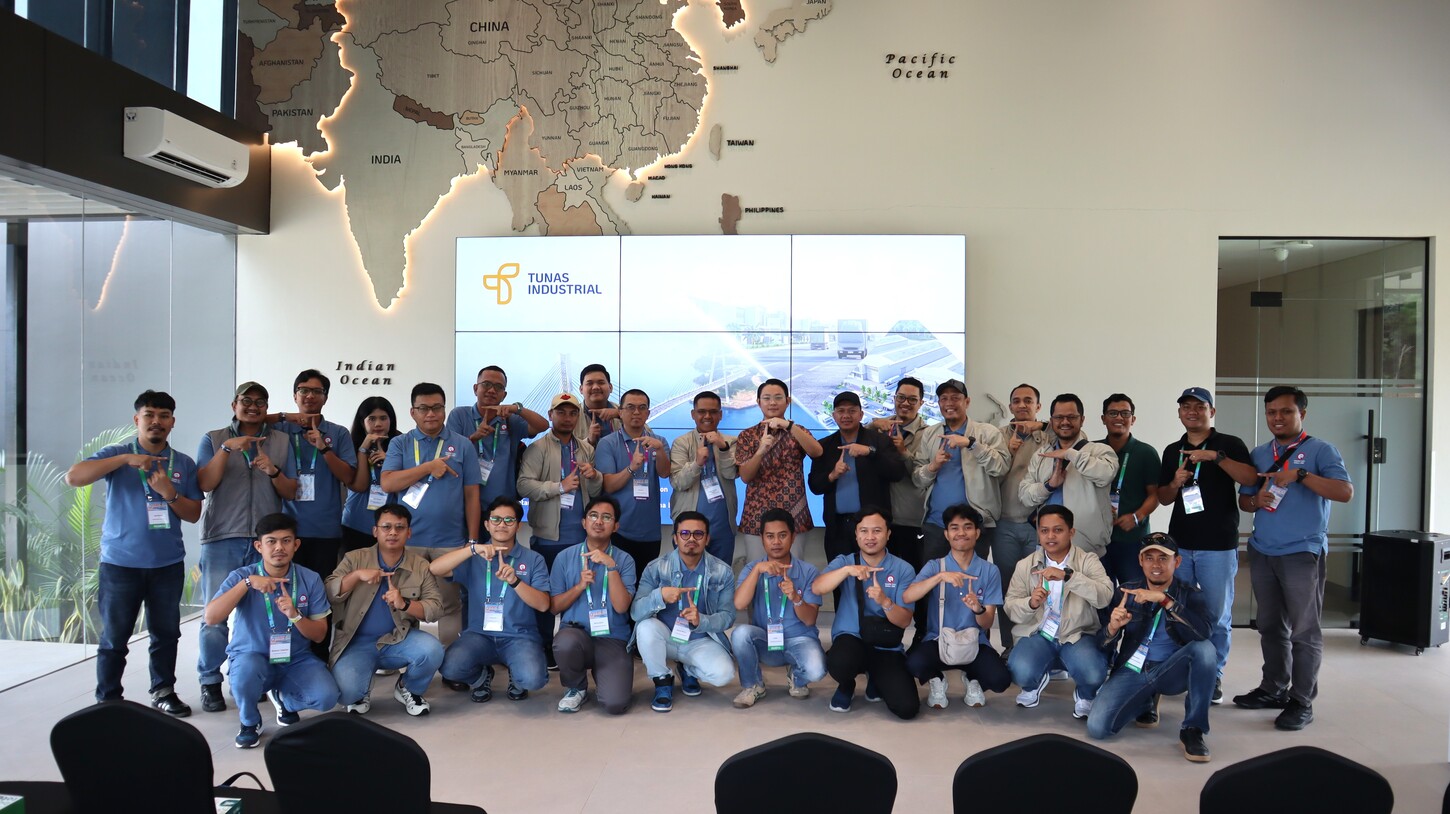
Batam, 28 November 2025 – Tunas Prima Industrial Estate today welcomed the official delegation of the National Quality and Productivity Convention (TKMPN) XXIX 2025, an annual national platform where Indonesian organizations showcase their innovations and achievements in quality and productivity enhancement.
Held in Batam from 24–28 November 2025, TKMPN once again entrusted the city as host for the fourth time. This year’s theme, “Strengthening National Competitiveness Through Productive and Sustainable Innovation,” brought together participants from multinational companies, state-owned enterprises, private corporations, government institutions, universities, healthcare organizations, and non-profit institutions.
As part of the industrial visit agenda, Tunas Prima Industrial Estate was selected as a strategic destination for participants to observe Batam’s industrial ecosystem and understand how the estate supports national productivity goals—especially through its sustainability-driven development approach. A total of 28 participants joined the on-site discussion and presentation.
Innovation & Estate Governance at Tunas Prima Industrial Estate
During the Focus Group Discussion (FGD), Chrispin Andereas, Head of Business Development at Tunas Industrial, presented the estate’s strategic initiatives and addressed key questions on operations, sustainability, and Tunas Prima’s readiness to meet future industrial demands.
1. Waste Management
Participants highlighted Batam’s waste challenge, with the city generating 1,300 tons of waste per day (DLH Batam, 2023) and landfill capacity projected to last only until 2030. To address this:
- Tunas Prima is the pioneering industrial estate in Batam to initiate a centralized Industrial Waste Management program.
- The program is built on four pillars: technology innovation, source-based segregation, centralized control, and converting waste into value.
- Waste is managed under an organic–inorganic–economic framework, with 50% recycled through a Materials Recovery Facility (MRF).
These efforts align with Batam City’s long-term plan for a more modern and sustainable waste management system.
2. Clean Water & Wastewater Management
To ensure sustainable water availability:
- Tunas Prima partners with SPAM Batam as the main clean water supplier.
- The estate applies Reduce, Reuse, Recycle principles through:
- WELS 3-ticks certified sanitary fixtures
- A Rainwater Harvesting Pond as an alternative water source
- Wastewater treatment via a Wastewater Treatment Plant (WWTP) before discharge
3. ISO Implementation
Tunas Prima is currently undergoing the audit phase for ISO 9001 implementation, reinforcing its commitment to operational quality.
4. Mobility & Internal Transportation
Tunas Prima is designed as a pedestrian-friendly estate with safe and comfortable pathways within a 1 km radius from the main entrance to offices and warehouses. Pick-up points for taxis and online ride-hailing services will be available at the front entrance. Vehicle restrictions are enforced to maintain safety and order within the estate.
5. Innovation & Green Infrastructure
Tunas Prima is the first green industrial estate in Batam to receive the Green Mark Provisional Certificate from BCA International, supporting its vision of a low-carbon industrial zone through:
- An IoT-based Command Center for environmental monitoring
- Interconnected walkways and bicycle-friendly paths
- Drought-resistant landscape planting
- Energy efficiency and optimized resource use
- Eco-friendly landscape design with future expansion zones
Batam’s strategic position in the Singapore–Malaysia Golden Triangle further strengthens Tunas Prima’s role as a global industrial hub and a preferred destination for modern supply chain activities.
The TKMPN 2025 visit reaffirms Tunas Prima Industrial Estate’s position as a progressive, adaptive, and sustainability-driven industrial area. With modern governance and green infrastructure, Tunas Prima continues to support national efforts to enhance quality, productivity, and competitiveness.
27 Oct
Tunas Prima Sustainable Waste Management
Transforming Waste into Value: Tunas Prima’s Integrated Approach to Sustainable Waste Management
Urgent Waste Challenges
Waste pollution is escalating worldwide. The United Nations estimates that without quick action, plastic waste could nearly triple by 2060, affecting climate, ecosystems, and human health (UNEP, 2023). Indonesia faces this urgency firsthand. The country produces 69.9 million tons of waste annually, yet only around 10% is properly processed, while a significant share remains unmanaged (Ecoton, 2023). Rivers, seas, and urban environments are increasingly impacted.
Waste Challenge of Batam
As one of Indonesia’s fastest-growing industrial regions, Batam generates 1,200–1,300 tons of waste daily (Batam Environmental Agency, 2023). The Telaga Punggur landfill is nearing capacity and forecasted to be usable only until 2030 (Ministry of Environment and Forestry, 2021). Restrictions on industrial waste disposal are tightening—highlighting the need for stronger private-sector solutions to maintain Batam’s growth as a clean and competitive industrial hub.
Tunas Group’s Commitment
Tunas Group, through Tunas Prima Industrial Estate, has taken proactive leadership in developing a centralized waste management system designed to reduce landfill dependence, improve recycling rates, and transform waste into valuable resources. The approach follows four main principles:
1. Innovation-Led Waste Solutions
Tunas Group continuously evaluates modern technologies including:
– Advanced recycling
– Waste-to-energy processes
– Pyrolysis conversion
These solutions are assessed based on efficiency, environmental impact, and feasibility for Batam’s industrial ecosystem.
2. Sorting at the Source
Employees and tenants are trained to segregate waste at the point of disposal Organic, Inorganic, Recyclable, and Hazardous. This improves downstream processing efficiency and reduces contamination—building a culture of accountability in daily operations.
3. Centralized Collection and Control
All industrial and commercial waste across the estate is routed through a centralized management facility, enabling:
– Uniform environmental standards
– Strict monitoring and traceability
– Prevention of illegal dumping or leakage
This directly supports Batam’s need for more efficient waste infrastructure.
4. Turning Waste into New Value
Tunas Group focuses on resource recovery through:
– Conversion of plastics and biomass into energy or biochar
– Repurposing residual waste for construction or industrial materials
This circular economy approach reduces emissions, lowers landfill dependence, and creates new economic value from discarded material.
Aligned with National Policy
The program fully complies with Indonesia’s environmental regulations, including:
– Law No. 18/2008 on Waste Management
– Government Regulation No. 101/2014 on Hazardous Waste
– Ministerial Regulation No. 75/2019 on reducing packaging waste
Tunas Prima Industrial Estate is the first in Batam to establish a centralized Industrial Waste Management Program, supporting the city’s long-term waste management strategy.
Driving a Cleaner Future for Batam
By integrating technology, operational responsibility, and sustainability culture, Tunas Group helps ensure that industrial growth in Batam does not come at the expense of the environment. Through this model, waste becomes a resource, not a burden — empowering Batam’s transition toward a circular, resilient, and environmentally responsible industrial future.
17 Jul
HR Gathering: Strategic Collaboration Tunas Group & JobStreet Indonesia
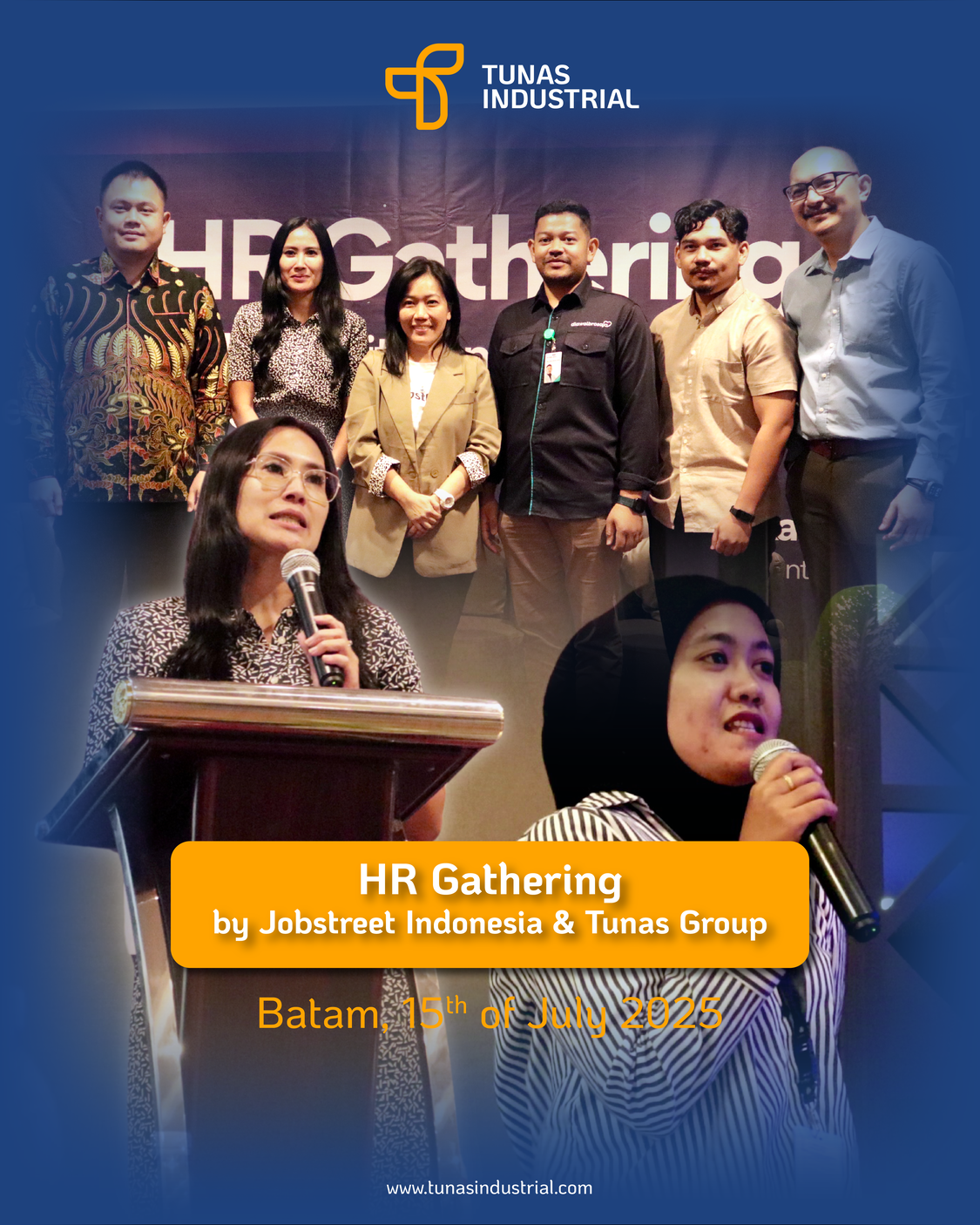
Batam, July 16, 2025 – Tunas Group, in collaboration with JobStreet by SEEK, successfully held an HR Gathering titled “Digital Recruitment Transformation & Industrial Waste Management in Batam” on Tuesday, July 16, 2025, at Hotel Santika Batam Center. The event gathered dozens of HR representatives from various tenant companies within Tunas Industrial Estate, supported by BPJS Ketenagakerjaan and Awal Bros Hospital Batam.
The HR Gathering served as a strategic forum for Batam’s industrial players to strengthen their digital recruitment transformation while building synergy in environmental management. The event featured two highly insightful sessions.
Digital Recruitment Transformation with JobStreet by SEEK
Imelda Wong, Head of Area for Jakarta and Sumatra at JobStreet by SEEK, presented how digital transformation has revolutionized recruitment processes in Indonesia. She highlighted that leveraging technology in recruitment allows HR teams to find the best talent quickly, accurately, and efficiently.
“Our collaboration with Tunas Group is a significant step to support Batam’s industrial growth by connecting companies with the right talent. We hope this HR Gathering will expand recruitment reach and provide an effective platform for better talent acquisition,” Imelda said.
She also introduced JobStreet Freemium, a free job posting solution to help companies find candidates without additional cost, alongside JobStreet’s commitment to implementing world-class AI for easier and more targeted recruitment processes. Imelda noted that Batam’s workforce is becoming more diverse due to increasing foreign investment and modern industrial growth, urging companies to adopt the latest recruitment technology to remain competitive.
The Urgency of Industrial Waste Management in Batam
The second session was delivered by Agiana Ditakristi (Dita), Director of Waste Management at Tunas Industrial, who revealed that Batam produces around 1,300 tons of waste daily (Batam Environmental Agency, 2023). However, Indonesia’s landfills are only projected to accommodate waste until 2030 (Ministry of Environment and Forestry, 2021), including Batam’s Punggur landfill which is reaching its limit. This has led to local government regulations restricting industrial waste disposal.
Dita emphasized that the accumulation of waste in TPSs can lead to a decrease in the quality of the environment, the danger of methane gas which is corrosive, plastic waste that fails to decompose in the soil and sea, and the emergence of microplastic problems that contaminate marine catches for human consumption.
She explained that industrial waste management is regulated under:
- Law No. 18/2008 on Waste Management, requiring producers to reduce and manage their waste
- Government Regulation No. 101/2014 on Hazardous Waste Management
- Ministry Regulation No. 75/2019 on Roadmap for Waste Reduction by Producers, mandating producers to reduce plastic and packaging waste.
As a compliance and innovation initiative, Tunas Industrial has become the first industrial estate in Batam to launch a centralized Industrial Waste Management program, supporting Batam City’s grand design for sustainable waste management. Dita encouraged participants to start with small actions, such as:
- Reducing single-use plastic
- Separating organic and non-organic waste
- Implementing Reduce, Reuse, Recycle (3R) practices within their companies.
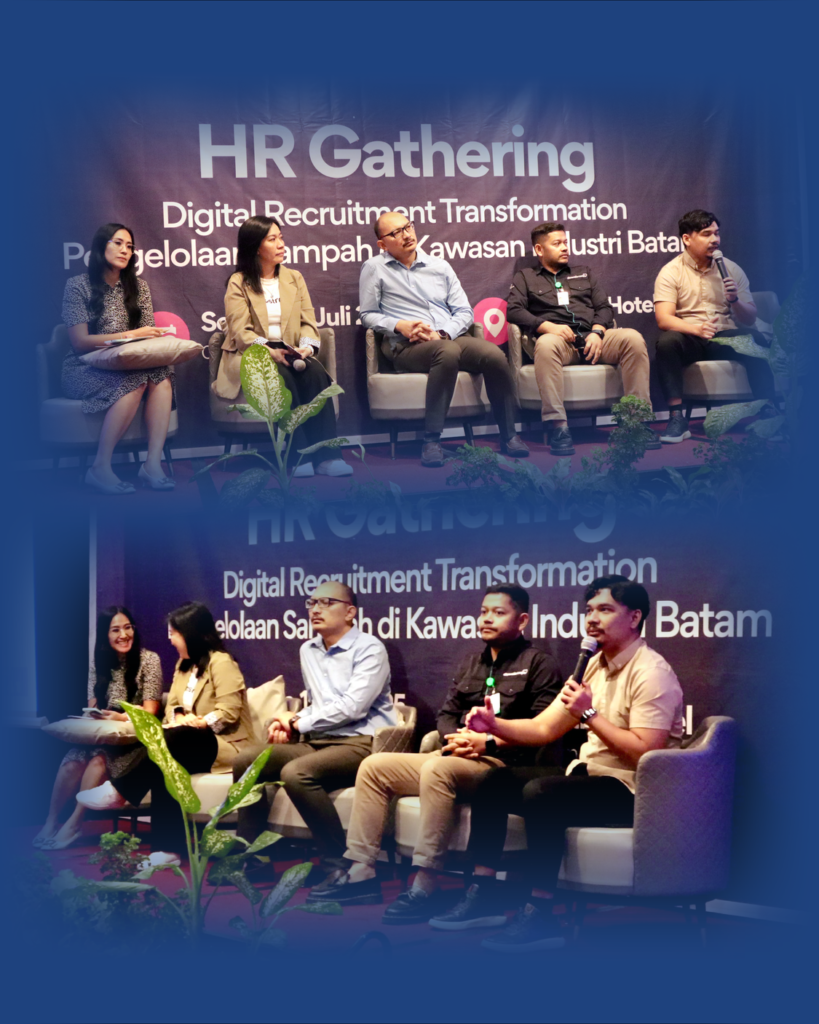
“With strong collaboration between industries and the government, we can build a Batam that is not only economically advanced but also clean and environmentally friendly,” she concluded.
The interactive discussion session allowed participants to share recruitment experiences, employer branding strategies, job seeker behavior trends in Batam, and their companies’ industrial waste management practices.
Interactive Sessions with BPJS Ketenagakerjaan and Awal Bros Hospital Batam
The event continued with BPJS Ketenagakerjaan’s session on:
- Understanding regulations and contribution obligations
- New employee registration, reporting, and payment processes
- Administrative challenges and solutions
- Strategies to ensure employees understand their BPJS rights and benefits.
This session aimed to help companies provide optimal social protection for their workers while ensuring compliance with government regulations.
The final session was led by Awal Bros Hospital Batam, presenting its health service programs for companies, from regular medical check-ups and health education to integrated health services that support employee productivity. Awal Bros reaffirmed its commitment as a leading and trusted healthcare provider in Batam.
The HR Gathering concluded with group photos and lunch, fostering stronger connections among participants and building strategic collaboration to advance Batam’s industrial sector.
Tunas Group: Your Strategic Partner for Business Growth in Batam
Through this HR Gathering, Tunas Group reaffirms its commitment to being the best partner for all companies and business players in Batam, delivering development programs aligned with today’s industrial needs. Tunas Group will continue to innovate to support digital transformation, green industry development, and the improvement of workforce quality and working environments in Batam.